The International Medical Case Reports Journal |
Science
A new approach to the biology of pain
Given Reneurx therapy is drug-free, it may help patients minimize or eliminate the use of opioids or avoid the possible chondrotoxic effect of corticosteroids.
In 2015, research led by Dr. Rox Anderson and Dr. Lilit Garibyan of Massachusetts General Hospital established the foundation for cold-mediated nerve-selective therapy. Their findings demonstrated that mildly sub-freezing temperatures can target myelin while sparing other tissue.
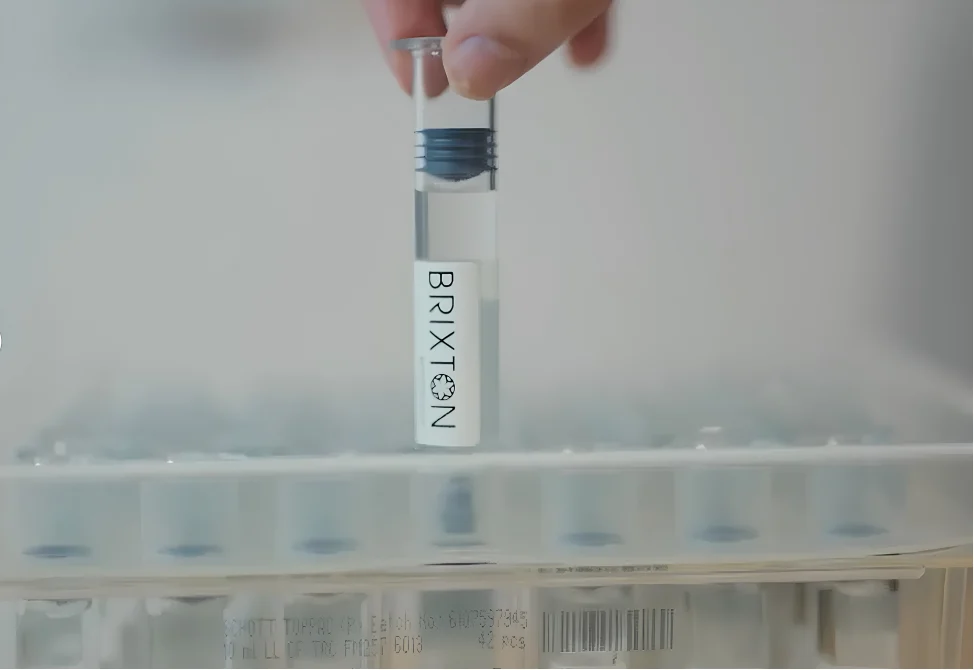
From this research, Brixton initiated the development and advancement of Reneurx™ Nerve-Selective Therapy – a biomaterial injected around a targeted treatment area at approximately -10˚C (14˚F). Once administered at this temperature, the biomaterial physically disrupts the lipid rich myelin sheath, interrupting pain transmission, while sparing surrounding tissues.
The myelin sheath is a specialized, protective fatty wrapping around nerve cell axons that acts as an electrical insulator to speed up signal transmission. An intact myelin sheath can allow pain signals to travel efficiently to the brain, where they're interpreted as pain.
When injected at -10˚C, the biomaterial rapidly removes heat from the treatment zone, resulting in prolonged exposure of the target nerves to mild cold temperatures. This unique selective thermal exposure physically disrupts the lipid-rich myelin sheath while also sparing surrounding tissues. The downstream nerve response enables long-term reduction in signal transmission providing patients with durable pain relief.

Publications & Presentations
Publications
Osteoarthritis and Cartilage |
Nerve-Selective Therapy For Painful Knee Osteoarthritis: First-In-Human Cohort Study Of Safety And Efficacy
Presentations
2026 World Congress on Osteoarthritis |